But what about 5? And 20? And 100? 🤔
In the first part of this mini-series, I gave some tips on how to not burn through the entire 5-hour limit in 20 minutes.
The truth is, I have already suffered from this problem when spawning multiple agents.
The setup: application of a skill across many projects.
Started with a project by project (for loop) application. Was too slow, context growing but managed.
At this point – why not stopping the process here, create a handoff file with the remaining tasks, and spawn the agents.
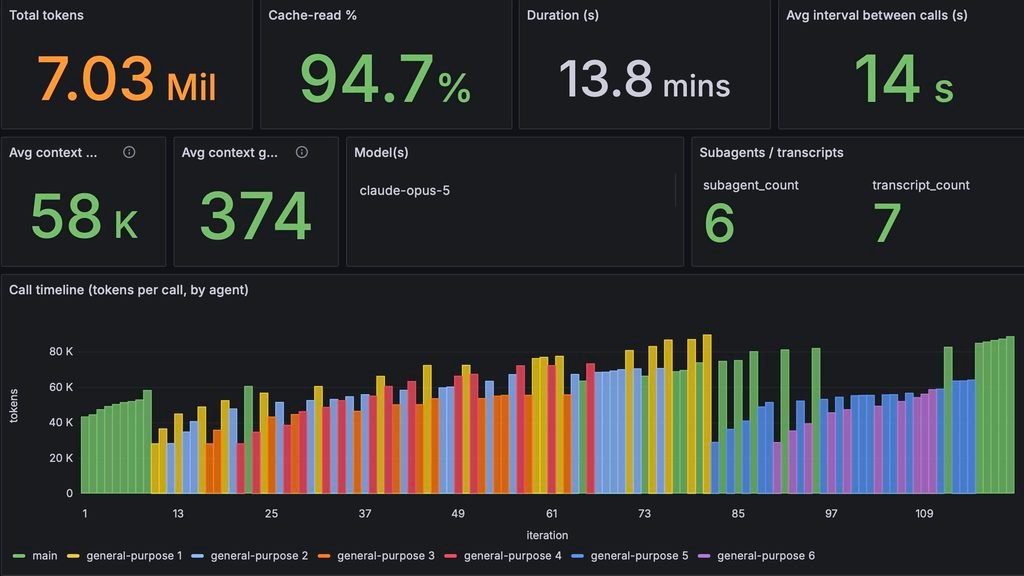
→ Advanced model. One main thread with 10 sub-agents spawned.
Not even 10 minutes in, and 40% of my 5-hour limit consumed! No take backs. On top of my already consumed 60%.
– No more work done until the window was reset.
– No possibility to make a handoff of what was done.
Why it happened?
- I had not followed my normal orchestration
- Too many agents running in parallel meant I could not manage them properly, and for some context got out of control
- Underestimation of cost. One agent running seems okay. 10 at the same time, is a high-speed train draining your tokens
On top of this: fast development means fast updates to Claude Code, and CLAUDE.md might get misaligned with the latest.
What strategies do you follow when spawning many agents?
[P.s. In the image is a monitoring tool I am developing [more news soon] illustrating part of the session above]
#Anthropic #ClaudeCode #TokenOptimization