
3 months using Claude.
One of the first things I did was researching:
– What is the base context when I just send one simple “Hey Claude”?
– Why to many cache write and cache read tokens from this message?
And I thought I had it all optimised.
❌ Could not be more wrong
I asked Claude itself to analyze and breakdown the context. One tool came as the clear champion: Artifact.
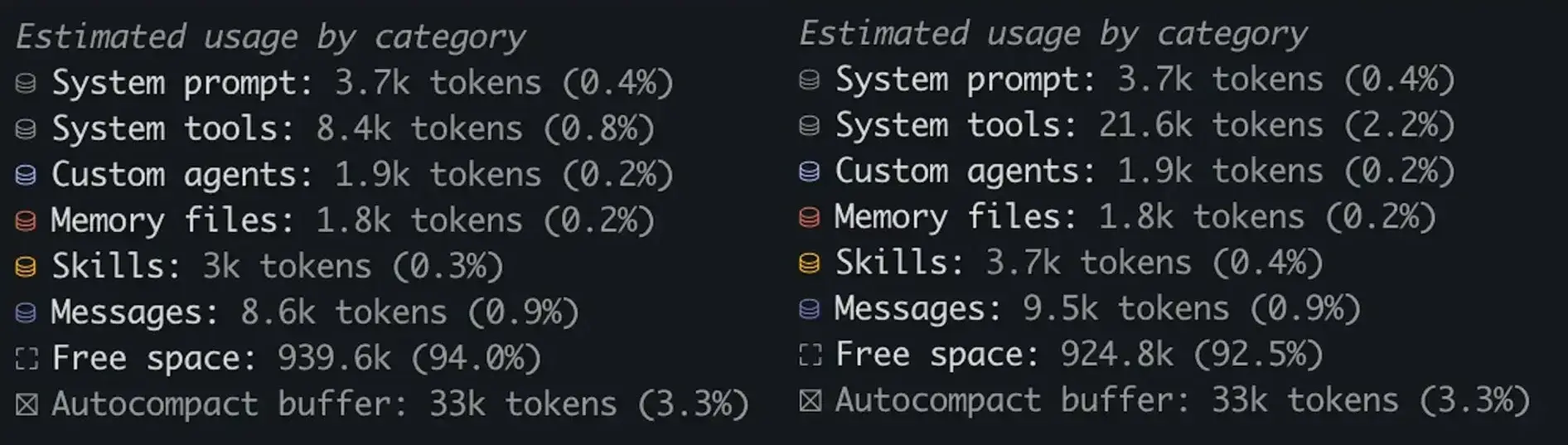
13k tokens. Making up for more than half the system tools. Getting repeated and repeated in the context every api call.
Does not see much, but after 100 API calls in a session, that’s more than 1M tokens of cache read.
And how many times I used it? Once. Back in July.
How to disable it? One line in your settings.json:
“disableArtifact”: true
That’s it. Test for yourself and see the effects in your /context command like in the image.
I had it already disabled (left or the image) and enabled it again (right of the image).
And I have to ask: Anthropic why such a bloated tool?
#ClaudeCode #TokenOptimization #LLM #Anthropic

Comments (2):
Claude Code – what is an Artifact? – Nelson Eiró
[…] the last post (Is your ClaudeCode context actually optimised?), I have mentioned the Artifact tool from Claude Code and how it was bloating the System […]
What would my Claude Code usage cost on the API? – Nelson Eiró
[…] The deep dive Token accounting explains the counting and the cost views. Related: Is your Claude Code context actually optimised? […]